ServicesCommercial Roofing
Commercial Roofing in Wendell, NC
We inspect, repair and replace low-slope and metal roofs on small commercial buildings, from shops and offices to churches and warehouses. You get a straight answer on what is causing the leak, what it will take to fix, and whether repair or a new membrane makes more sense.
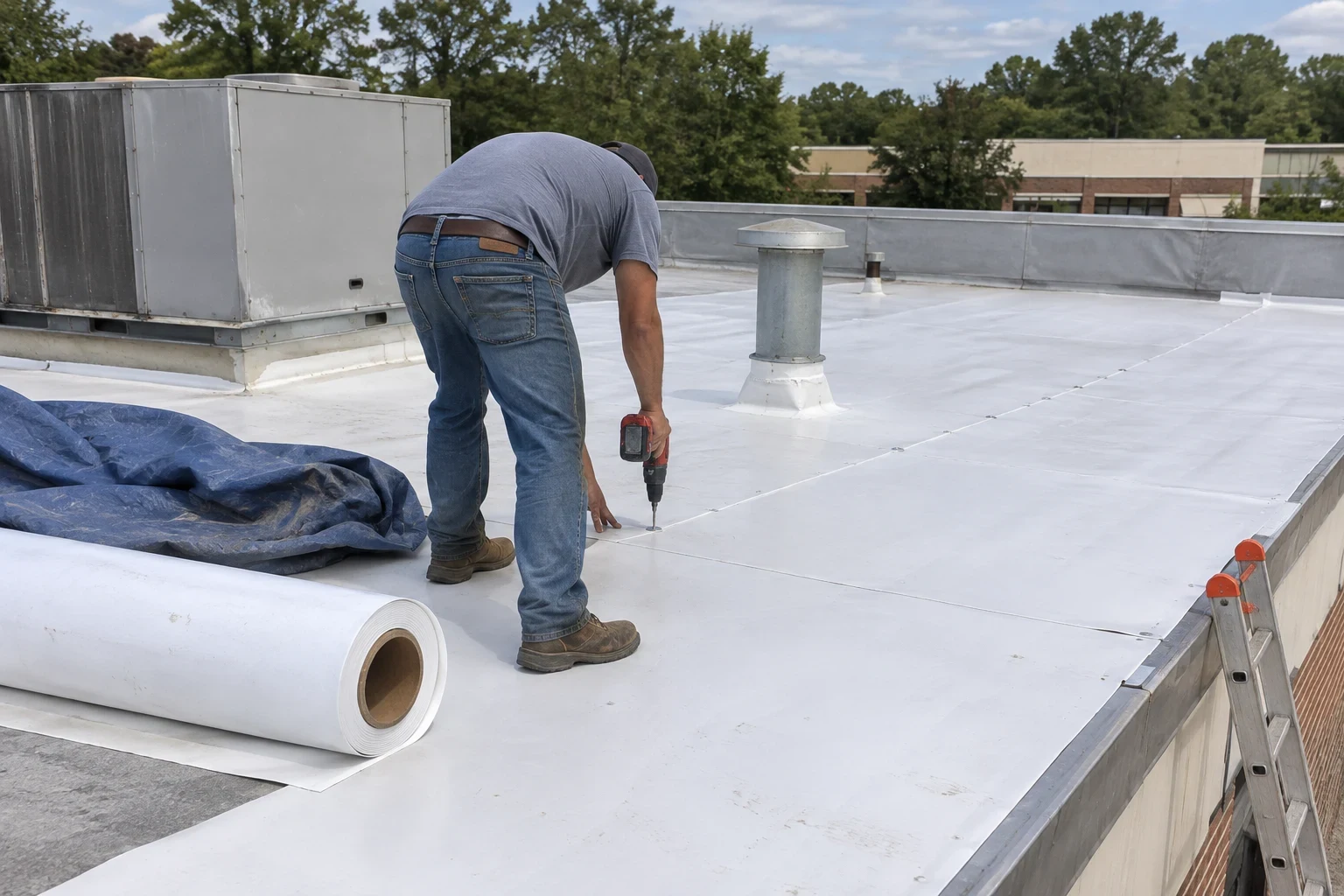
What we do on commercial roofs
Most small commercial buildings around Wendell, Zebulon and Knightdale sit under a low-slope roof: TPO or EPDM single-ply membrane, modified bitumen, or a metal panel roof. These systems fail differently from shingles. Water does not shed quickly, so a split seam, a loose flashing or a clogged drain lets it sit until it finds a path into the deck.
We work on existing buildings: leak repairs, flashing and drain work, membrane and metal panel repairs, and full tear-off and replacement when a roof has reached the end of its life. Our approach is plain. Find the cause, show you photos, then lay out the options and what drives the cost of each.
What our commercial roofing work covers
Leak tracing and repair
Water on a ceiling tile often enters several feet away. We trace it back along the deck to the actual entry point, usually a seam, a penetration or a failed flashing, and repair that spot instead of patching where the stain shows.
Membrane seams and patches
On TPO we heat-weld new material to cleaned, prepared membrane. On EPDM we use primer and seam tape made for the existing sheet. Mismatched patch materials are one of the most common reasons a repair fails within a season.
Flashing, curbs and penetrations
HVAC curbs, vent stacks, pitch pans and parapet walls are where most low-slope leaks start. We rebuild base flashing and counterflashing, and refill or replace pitch pans whose sealant has dried and cracked.
Drains, scuppers and gutters
Ponding water adds weight and speeds up membrane aging. We clear and reset drains, scuppers and edge gutters, and mark low areas where water stands more than 48 hours after rain.
Metal roof repair
Exposed-fastener panels leak when the rubber washers under the screw heads break down in the sun. We replace or reseat fasteners, reseal panel laps, and treat surface rust before it eats through.
Full tear-off and replacement
When the insulation under the membrane is wet across large areas, repair stops making sense. We remove the old system, replace saturated insulation, and install a new membrane with new edge metal and flashings.
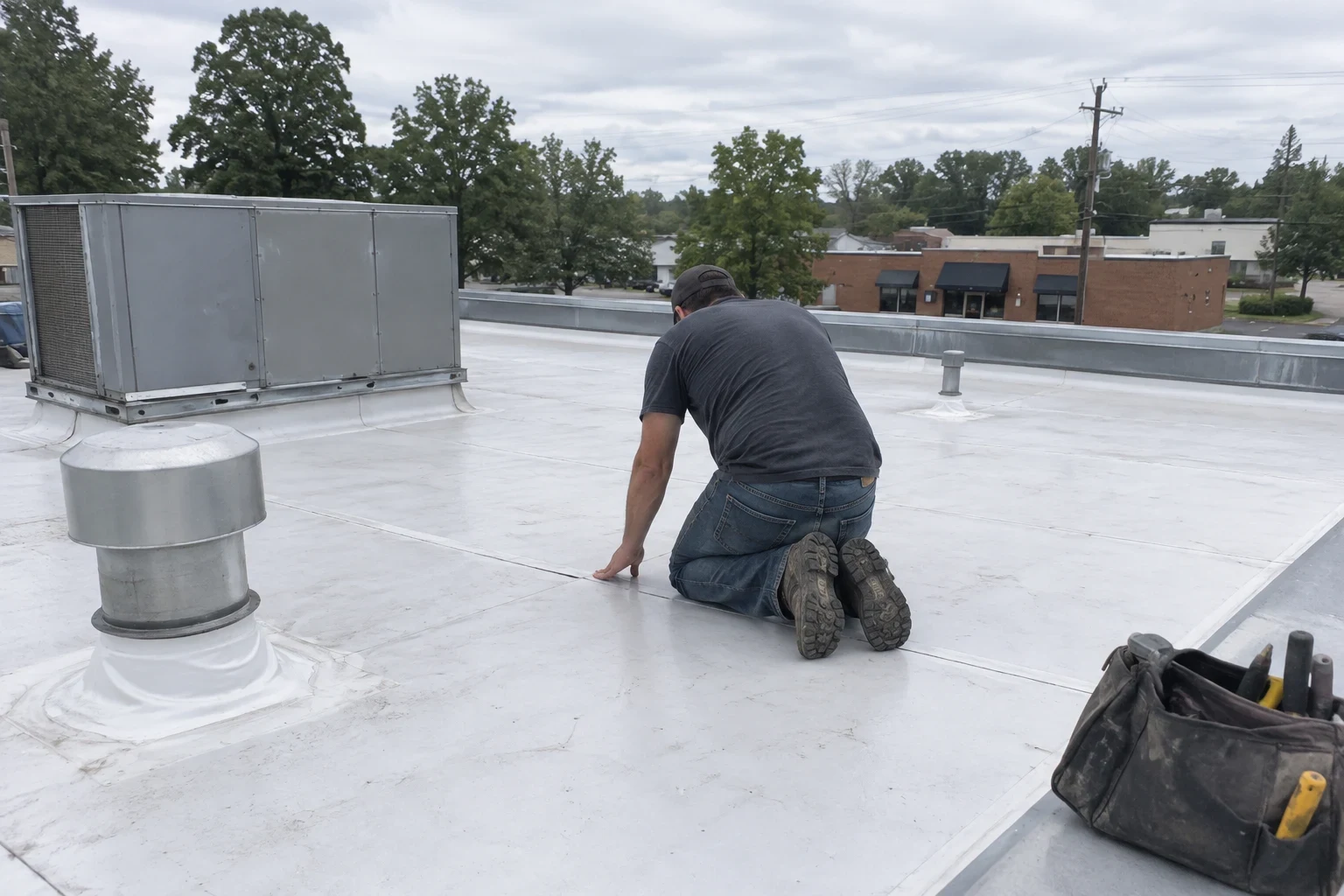
Signs your commercial roof needs attention
- Stained or sagging ceiling tiles
- A stain that grows after each storm means water is reaching the interior. By then the insulation above it is usually wet too.
- Water standing after rain
- Puddles that last two days or more point to a clogged drain, a sagging deck or insulation that has compressed. Standing water also hides seam failures.
- Blisters, wrinkles or shrinkage
- Shrinking EPDM pulls away at corners and edges and tents the flashing. Blisters in modified bitumen trap moisture and split open under foot traffic.
- Loose edge metal or open seams
- After a strong summer thunderstorm, check the perimeter. Lifted edge metal lets wind get under the membrane, which is how a small failure becomes a large one.
- Soft spots underfoot
- A spongy feel when you walk the roof means wet insulation. Wet insulation loses much of its insulating value and keeps feeding moisture to the deck.
- Rust and backed-out screws
- On metal roofs, screws that have backed out or rust streaks below fasteners are early leak points. They are cheap to fix now and expensive to ignore.
How a commercial roof job runs
- 1
Call and set a time
You call and we schedule a free roof inspection around your business hours. Tell us where the leaks show and how old the roof is, if you know.
- 2
Roof walk and photo report
We walk the full roof, check drains, seams, flashings and penetrations, and look inside where water shows. You get a photo report of findings you can share with an owner or landlord. We complete 1,000+ roof inspections every year, so we know where these roofs tend to fail.
- 3
Options and a written estimate
We explain repair versus replacement, what each one fixes, and how long each is likely to hold. If the roof has good years left, we say so.
- 4
Work day
We stage materials away from entrances, keep customer and tenant access clear, and protect interior areas below active work. Debris is bagged and lowered as we go.
- 5
Final check
We inspect repaired areas, clear drains and the perimeter, and send photos of the finished work.
What moves the price of commercial roof work
We do not quote a commercial roof by the square foot over the phone, because the figure that matters most is hidden under the membrane. Once the inspection is done, we put the estimate in writing and break it out line by line. Flashing, insulation, drains and labor each get their own entry, so nothing is lumped together.
- Wet insulation
- Moisture readings and core cuts tell us how much insulation is saturated. A small wet area can be cut out and replaced as part of a repair. Moisture spread across large sections usually points to replacement.
- Size and penetrations
- Square footage sets the base, but every HVAC unit, vent, skylight and pipe adds flashing labor. A small roof crowded with equipment can cost more per square than a large open one.
- Membrane and attachment
- TPO, EPDM and modified bitumen differ in both material and labor. Mechanically fastened systems go down faster than fully adhered ones, which take more adhesive and need dry, mild weather.
- Access and building use
- A lift or hoist, tight parking areas or work timed around open hours all add time to the job.
- Drainage corrections
- Fixing chronic ponding may call for tapered insulation, crickets or added drains. That raises the up-front cost and lengthens the life of the new membrane.
Commercial roofing questions
- What kinds of buildings do you work on?
- Small commercial buildings with low-slope or metal roofs: retail storefronts, offices, churches, shops and warehouses. We repair and replace roofs on existing buildings. If your roof is outside what we handle well, we will tell you on the first visit.
- Should I repair or replace my commercial roof?
- It comes down to how much of the insulation is wet and how much life the membrane has left. If the damage is limited to seams, flashings or a few spots, repair is usually the right call. If moisture runs across large sections or the membrane is brittle and shrinking, repairs will keep failing. The photo report shows you which situation you are in.
- Can you work while my business is open?
- In most cases, yes. We plan staging, noisy work and material lifts around your hours and keep entrances clear. We will talk through the schedule with you before anything starts.
- Will insurance pay for storm damage to a commercial roof?
- That depends on your policy and on whether the damage came from a covered event or from age and wear. We offer adjuster meetings and help through the insurance claim process, including photos of the damage. The adjuster and your insurer make the coverage decision, not us.
- What credentials should a property manager ask about?
- We are a licensed general contractor in North Carolina, and we are insured. Owners and property managers often need proof of both before anyone steps onto the roof. Mention it when you call and we will get you what you need for your records.
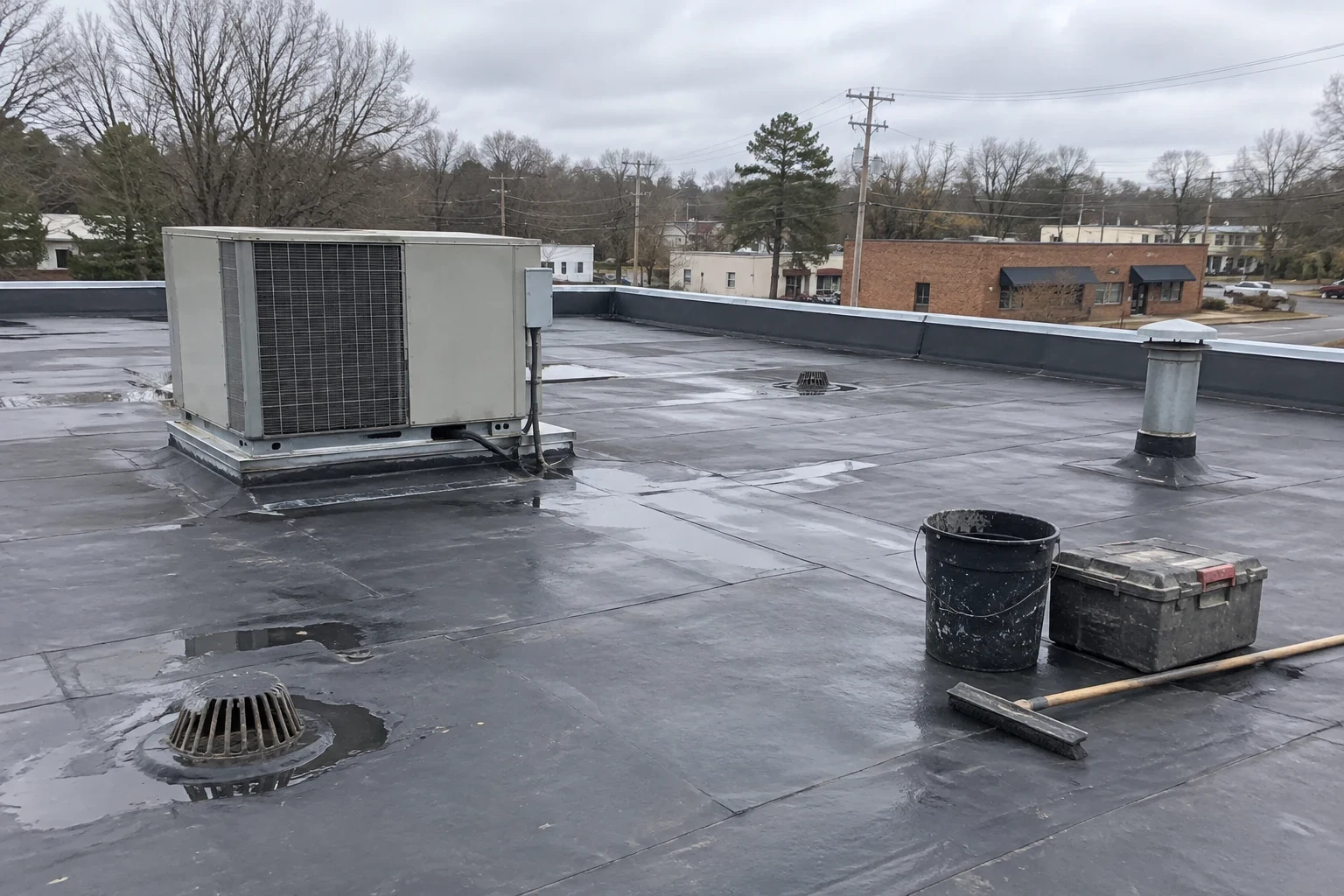
Find out what your roof actually needs
We will walk the roof, find the cause and show you photos before you spend anything. You decide on repair or replacement with the facts in hand.