ServicesSiding
Siding Repair and Replacement in Wendell, NC
Cracked, warped or loose siding usually points to a cause: hail, poor nailing or water slipping in where a roof meets a wall. We find that cause, show you photos and tell you plainly whether a repair will hold or replacement is the better option.
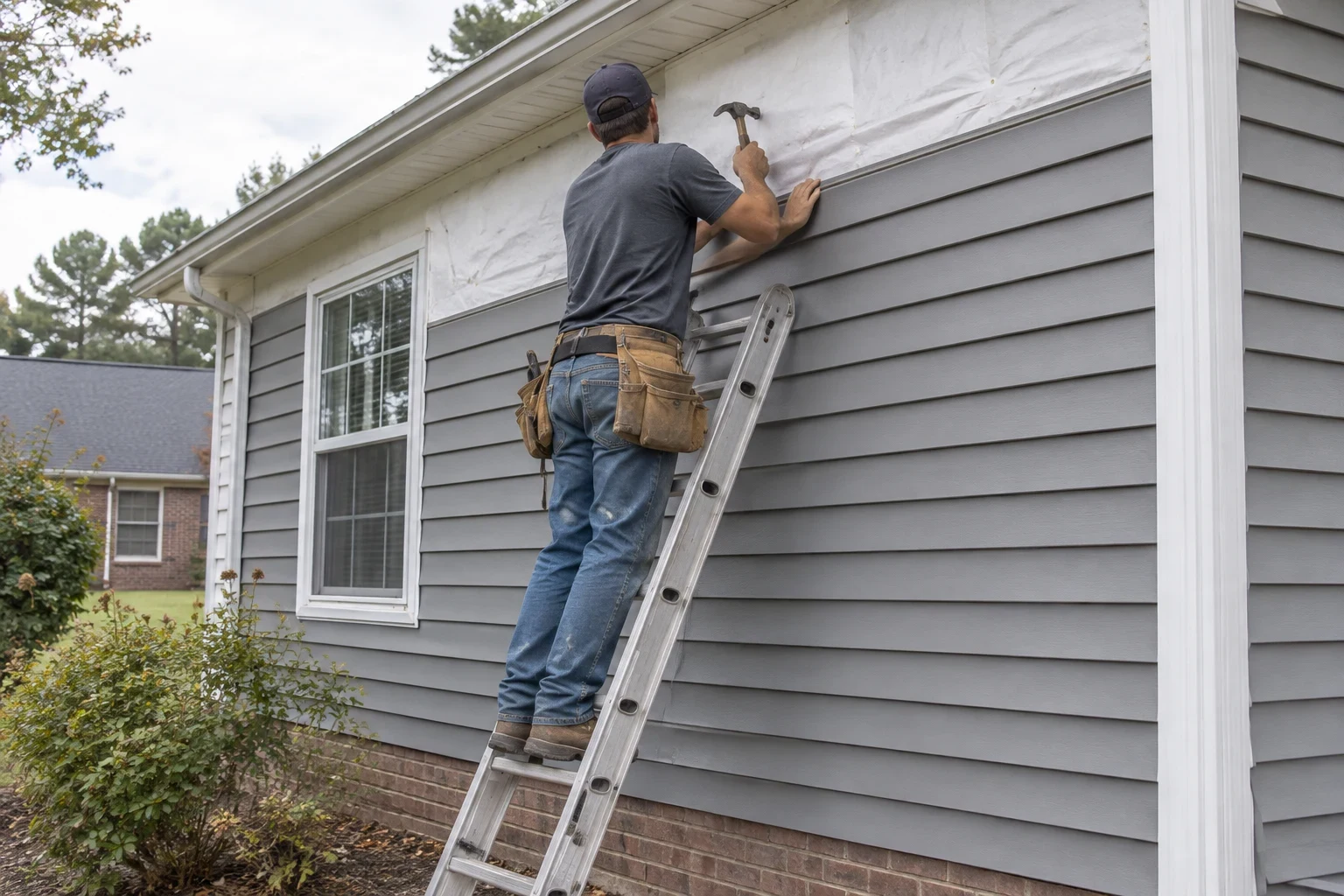
Repair or replace: how we decide
Siding is only the outermost layer of your wall's weather barrier. Under the vinyl or fiber cement panels you have house wrap, flashing and sheathing, typically OSB or plywood. When we trace a siding complaint back, the panels themselves are rarely the root of it. Water gets in at a seam, over a window head or at the spot where a roof edge runs into a wall.
When only a handful of panels are damaged and the wood underneath is still dry and solid, a repair makes sense. When panels are breaking down along an entire elevation of your home, or the sheathing gives under a probe, new siding on that wall is cheaper in the long run than fixing it twice.
Every dormer, porch roof and garage tie-in is a place where siding and roofing overlap, so we inspect both together. Our crew completes 1,000+ roof inspections every year, and reading flashing details on all those roofs is the same skill a siding leak demands.
What our siding work covers
Panel and trim repair
We unlock the courses above a damaged vinyl panel with a zip tool, slide in a new piece in the same profile, such as Dutch lap or clapboard, and relock it. Older vinyl fades, so if a new panel will look brighter than its neighbors, we tell you before we order it.
Full siding replacement
We strip the old siding, inspect the sheathing, then install new house wrap lapped so water sheds downward. New starter strip, corner posts and J-channel go on before the first panel.
Vinyl and fiber cement
Vinyl is hung loose on its nails so it can expand and contract with temperature swings. Fiber cement is nailed tight, weighs more and stands up better to impact, but it needs proper clearance above roof surfaces and grade to stay dry.
Roof-to-wall flashing
Step flashing and kickout flashing direct water off the wall where a roof meets siding. A missing kickout is one of the most common reasons we find rotted sheathing below a roof edge, so we correct it as part of the job.
Sheathing and rot repair
Soft OSB gets cut back to solid wood and replaced before anything new covers it. We photograph it first so you see what we found.
Storm damage and insurance help
For hail or wind damage, we offer adjuster meetings and help through the insurance claim process. We document the damage and explain it, and the adjuster makes the coverage decision.
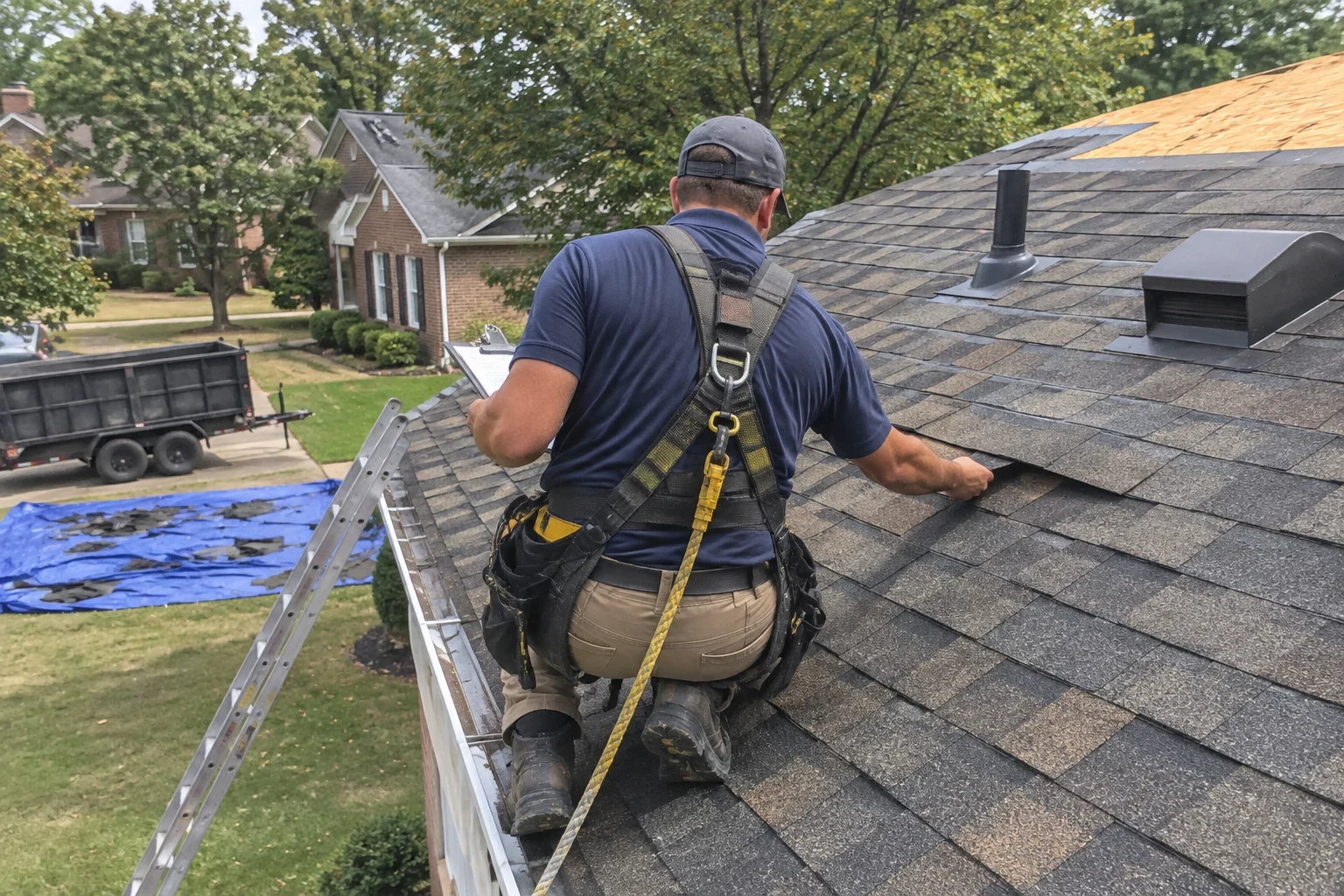
Warning signs on your siding
- Bowed or rippled panels
- When vinyl is fastened too tightly, it has no room to slide as it warms, so it bulges out from the wall. Sunlight bouncing off a nearby window can distort it as well.
- Cracks, chips or holes
- Hail and wind-blown debris break vinyl, and cold makes it more brittle. A hole the size of a coin is enough for blowing rain to reach the house wrap.
- Stains below a roof edge
- Dark streaking or a spongy patch on the wall beneath the end of a roofline usually points to a missing kickout flashing. The rot behind it tends to spread past what the stain shows.
- Loose or missing pieces after a storm
- Summer thunderstorms and passing tropical systems pull off panels whose locks had already worked loose. With one gone, wind gets under the edge of the next course up.
- Moisture on the inside
- Musty odors, swollen baseboards or staining on the inside face of an exterior wall can all lead back to water trapped behind the siding.
How a siding job runs
- 1
A phone call and a scheduled visit
Describe the cracks, stains or loose panels you have noticed, and we book a free inspection covering your siding and the roof edges above it.
- 2
Inspection with photos
We walk all four sides of your home, check each flashing joint and remove a panel where needed to test the sheathing. Afterward you receive a photo report of findings instead of a guess over the fence.
- 3
A written, line-item estimate
Materials, square footage, flashing and a sheathing allowance each get their own line. We explain whether repair or replacement suits your walls and the reasons behind it.
- 4
The work day
Roofing Wendell is a licensed general contractor in North Carolina, and we carry insurance on every job. We cover shrubs and AC condensers before work starts, pull any required permit, and sweep the yard with a magnet for loose nails at the end.
- 5
Final walk-through
Together we look over the finished walls, we show you the new flashing, and we answer anything you want to ask before we pack up.
What moves the cost of siding work
Siding cost depends on how much wall we cover, what goes on it and what we find underneath. We cannot price hidden rot before we see it, so our estimate shows a separate line for sheathing repair. Financing is available through Acorn Finance for larger projects.
- Wall area and height
- Square footage drives material and labor. Two-story walls need staging or lifts, which adds time.
- Material choice
- Vinyl costs less to buy and install. Fiber cement costs more and takes longer to cut and fasten, but resists impact better.
- Sheathing condition
- Dry, solid sheathing adds nothing. Soft or delaminated OSB has to be replaced first, and the amount varies wall by wall.
- Trim, openings and flashing
- Every window, door, corner and roof-to-wall joint adds trim pieces and flashing. A plain rectangular wall goes faster than one broken up by gables and dormers.
- Color match
- If new vinyl will not match faded panels, you may choose to re-side a full side of your home so the difference is not visible.
Straight answers about siding
- Is it possible to swap out only the cracked or broken pieces?
- In most cases it is, as long as the sheathing behind them is still firm. We match the profile and exposure of your existing panels so the replacement locks into the courses above and below. The catch is fading: older vinyl lightens in the sun, and we tell you up front if a new piece will stand out.
- Which holds up better here, vinyl or fiber cement?
- Each has a trade-off. Vinyl is lighter, quicker to hang and needs almost no upkeep. Fiber cement takes hail hits better and does not warp in summer heat, but it is heavy and slower to cut and fasten. We explain how both would behave on your particular walls and leave the choice to you.
- Does a homeowner's policy cover siding cracked by hail?
- It depends on the wording of your policy and what the adjuster documents. We photograph each dent and split, and we can meet the adjuster at your home to point them out. The coverage decision belongs to your insurer.
- Is a permit required to re-side a house?
- Not always. It turns on the size of the job and what the local inspections office requires. We check before starting and pull the permit whenever the work needs one.
- How many days will my siding project take?
- Replacing a handful of panels is usually a single visit. A full re-side generally takes a few working days, and the total depends on wall area, how much sheathing needs replacing and whether rain interrupts the work.
- Why would I call a roofer about my walls?
- Many wall leaks start above the siding: a kickout flashing that was never installed, step flashing that stops short or a gutter overflowing down the wall. Covering that with new panels only delays the next leak. Our Roof Repair and Gutters pages go into those details.
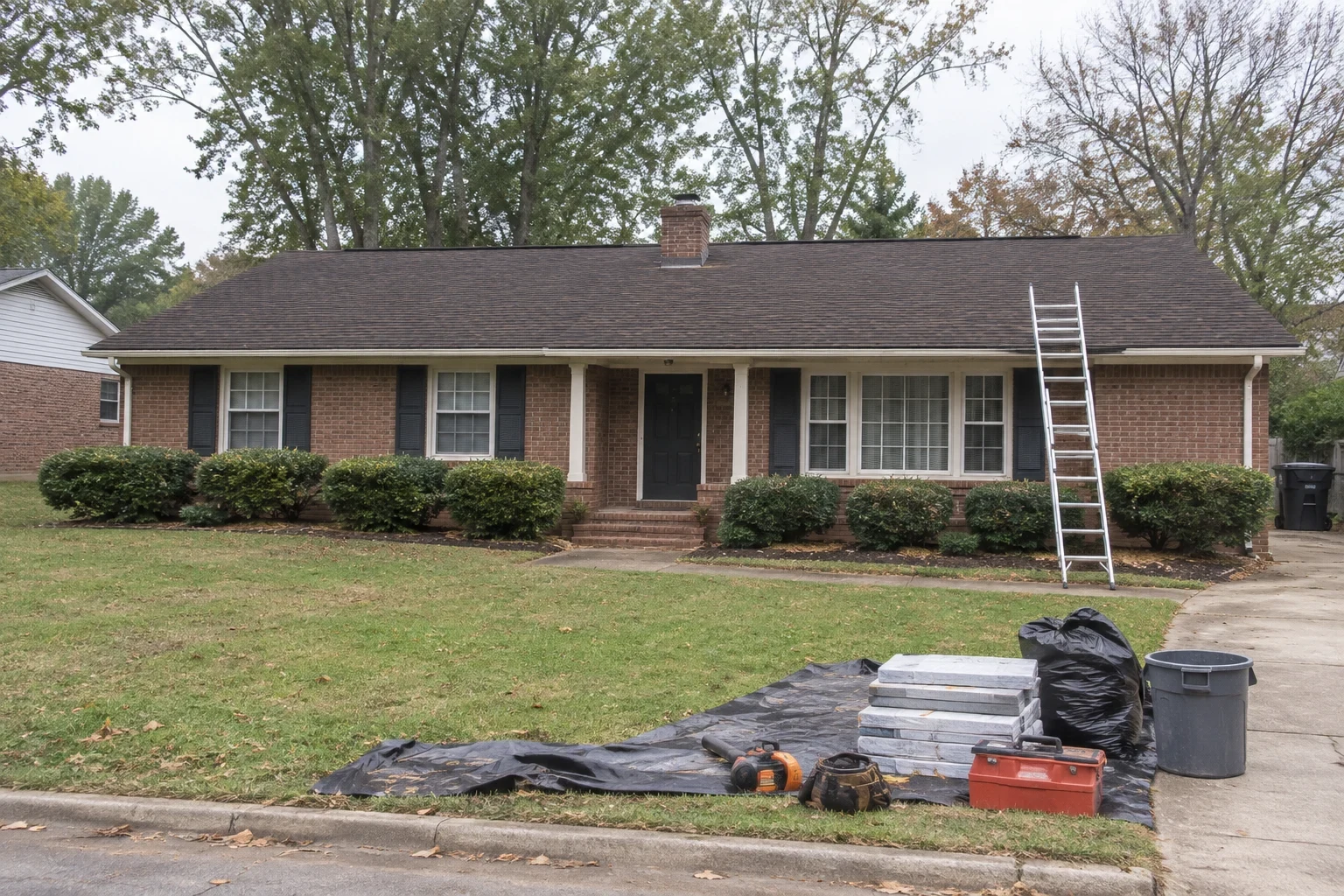
Find out what is behind the panels
We look over your siding and every roof edge that touches it, then send a photo report showing what we saw. You will know whether a repair will hold or the wall needs new siding before anything goes on the calendar.