ServicesGutters
Gutter Installation and Repair in Wendell, NC
We size, hang and repair gutters so roof water gets off your home and away from the foundation. You get a plain explanation of why the current system fails, what needs fixing, and photos of the fascia and drip edge behind it.
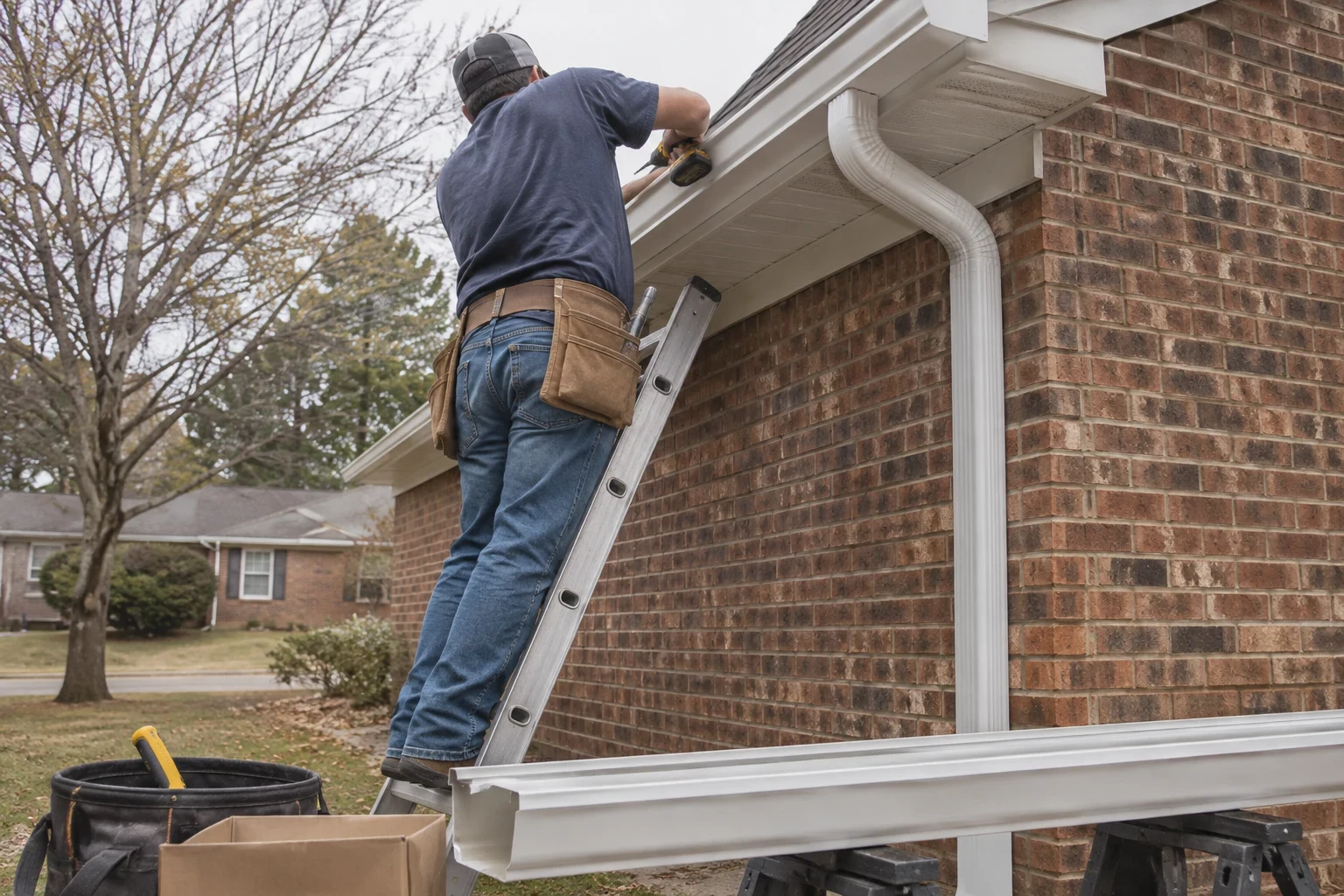
What Gutters Actually Do, and When They Need Work
A gutter has one job: collect the water that sheds off your roof and drop it somewhere harmless. When it overflows, sags or leaks at the seams, that water lands at the base of the wall, soaks the fascia board and pools against the foundation. Clay soil drains slowly, so a single bad downspout can keep one corner of a crawl space damp for days after a summer thunderstorm.
Some problems are repairs: a pulled hanger, a leaking miter, a downspout that dumps onto the slab. Others mean the system is undersized or the aluminum is worn out, and patching it costs more over time than replacing it. We tell you which one you have and why.
Gutters work with the roof, so we look at both. We complete more than 1,000 roof inspections every year, and the gutter line is where many roof problems show up first: granules in the trough, rot behind the drip edge, stains on the soffit.
What Goes Into Every Gutter Job
Continuous runs rolled at your home
A gutter machine on our trailer shapes aluminum coil into a single length for each wall, corner to corner. With no mid-run joints, there is less sealant to crack and fewer spots that can drip.
Size matched to roof area
A 5-inch K-style gutter handles the water on most homes. Big or steep planes that dump a lot of flow onto one eave usually call for a 6-inch trough with 3x4 downspouts, and we decide that from the square footage draining to each edge.
Screwed hidden hangers
Hidden hangers go in about every two feet, screwed through the gutter into solid fascia. The older spike-and-ferrule method works loose as the wood swells and shrinks with the seasons, which is the usual reason older gutters droop.
Fascia and drip edge review
We probe the fascia for soft spots and make sure the drip edge laps down into the trough before anything new goes up. When water runs behind a gutter, a missing or short drip edge is usually to blame, not the gutter.
Downspout placement and outlets
Downspouts go where the heaviest flow collects. Each one ends with an extension or splash block that carries water several feet out from the foundation rather than dropping it against the wall.
Signs Your Gutters Are Failing
Overflow in heavy rain
Water spilling over the front edge means the gutter is clogged, too small or pitched the wrong way. Pine needles and oak debris are the usual cause, but an undersized system overflows even when clean.
Sagging or pulled-away sections
A gutter that bows between hangers holds standing water, which adds weight and pulls it lower. Often the fascia behind it has softened.
Drips at seams and corners
Sectional gutters leak at their joints once the sealant dries out and cracks. Rust lines or dark streaks under a corner point right to it.
Peeling paint or rot on the fascia
Wet, flaking trim right behind the gutter usually means water is getting behind it at the drip edge.
Erosion or puddles at the foundation
A trench in the mulch or a wet crawl space under one downspout means the water is landing too close to your home.
How a Gutter Job Runs
- 1
Inspection and photo report
We walk the roof edge, check slope with a level, probe the fascia and run water through the downspouts. You get photos of what we found and a straight repair-or-replace answer.
- 2
Written line-item estimate
The estimate lists linear feet, gutter size, downspout count, hanger type and any fascia or drip edge work, so you can see what each part costs.
- 3
Removal and wood repair
We take down the old gutters, replace any rotted fascia boards and correct the drip edge before anything new is hung.
- 4
Install and test
New runs go up with a slight fall toward each outlet, about a quarter inch every ten feet. We flush them with a hose, check every seam and outlet, and haul away the old metal and debris.
What Sets the Price of a Gutter Job
Most of a gutter price comes from how many linear feet we hang and how high off the ground they sit. After that, it depends on what turns up behind the old system once it comes down. We measure at your home and break every item out on the estimate. If you would rather pay over time, financing is available through Acorn Finance.
- Footage and roof height
- Each added foot of gutter adds metal and labor. A two-story eave means longer ladders, more careful staging and more time on each run than a single-story edge.
- Trough and outlet size
- A roof plane that funnels heavy flow to one edge needs a 6-inch trough draining into 3x4 downspouts. That profile uses more aluminum per foot than a standard 5-inch gutter with 2x3 downspouts, so it costs more. For that kind of roof, it is still the correct choice.
- What the fascia looks like underneath
- Hangers only hold in sound wood, so any rotted fascia gets replaced first. Some of that damage stays hidden until the old gutters are off, which is why we tell you up front how extra boards would be priced.
- Miters and roofline breaks
- Every inside or outside corner, added downspout and change in the roofline means more cutting, fitting and sealing.
Gutter Questions, Answered Straight
Something not covered here? (919) 887-9827
Can my gutters be repaired, or do they need replacing?
Loose hangers, a few leaking joints and a misplaced downspout are usually repairs. Widespread sagging, corrosion, repeated seam leaks or a system that overflows when clean point to replacement. We show you photos of what we see so the decision is yours.
Do I need gutter guards?
If tall pines or oaks hang over your roof, guards can cut down how often the troughs clog. They do not make gutters maintenance-free, since fine needles and shingle granules still collect on top. We will tell you whether your roof and tree cover make them worth it.
Why is water running behind my gutter?
Most often the drip edge is missing, too short or sits behind the gutter instead of lapping into it. Water then follows the fascia down the wall. Correcting the drip edge fixes it, and that is part of how we hang new gutters.
Will storm damage to my gutters be covered by insurance?
Gutters dented by hail or torn down by wind or fallen limbs are often part of a storm claim, usually together with the roof. We meet with adjusters and help you through the claim process, and our Storm Damage Repair page covers how that works. Your insurer decides coverage.
What credentials do you hold for working on my home?
We are a licensed general contractor in North Carolina, and we are insured for the work we do. That covers gutter work as well as the fascia and drip edge repairs that often go with it.
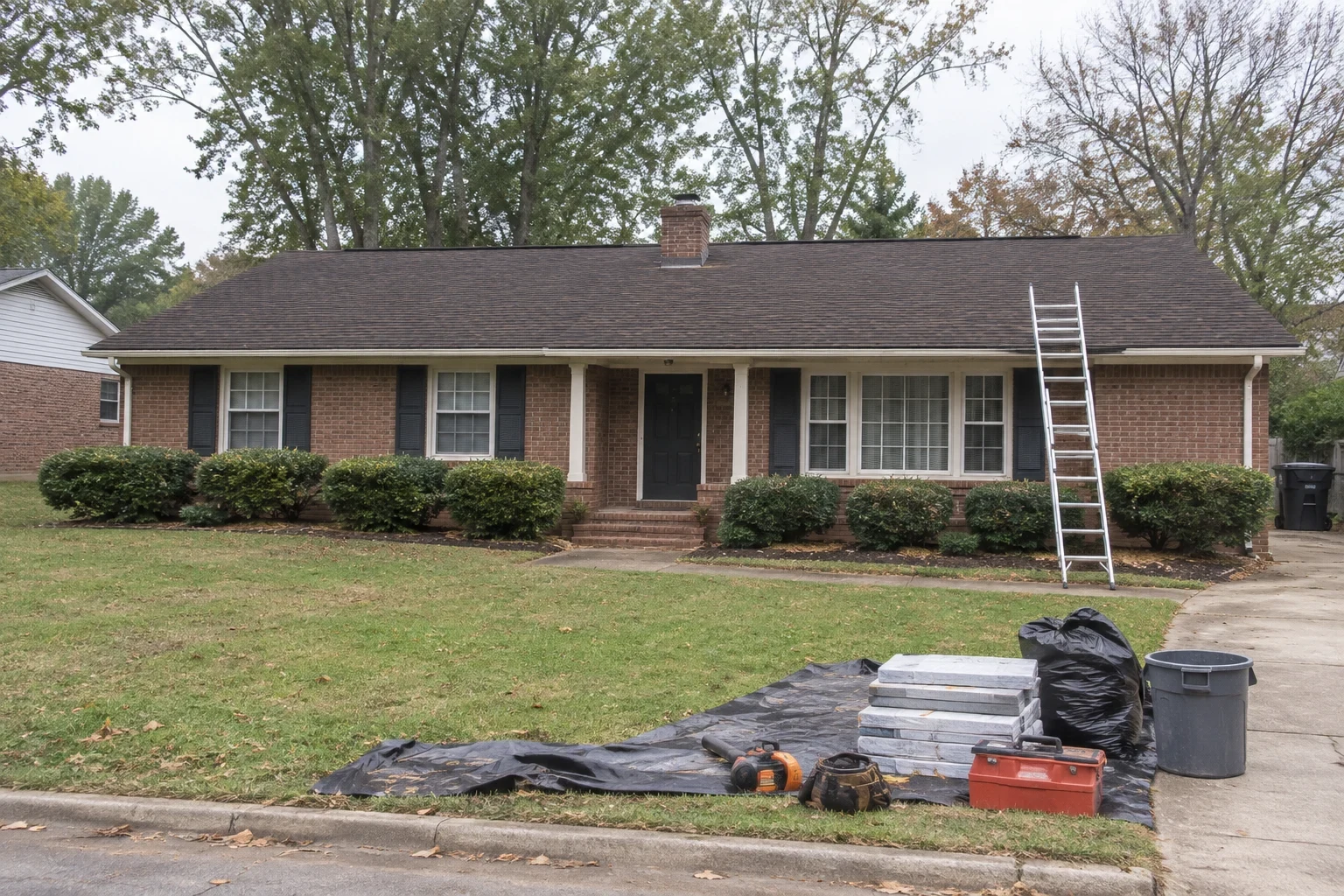
Find Out What Your Gutters Are Doing to Your Roof
We check the gutters, fascia and roof edge together and send you a photo report of what we find. We serve Wendell and nearby towns including Knightdale, Zebulon and Clayton.