ServicesRoof Replacement
Roof Replacement in Wendell, NC
Once the shingles across the whole roof are spent, patching only moves the leak. We strip the old system to bare sheathing, replace bad wood and build a new roof from drip edge to ridge cap, with a plain explanation of why it is needed and what sets the price.
When Replacement Is the Right Call
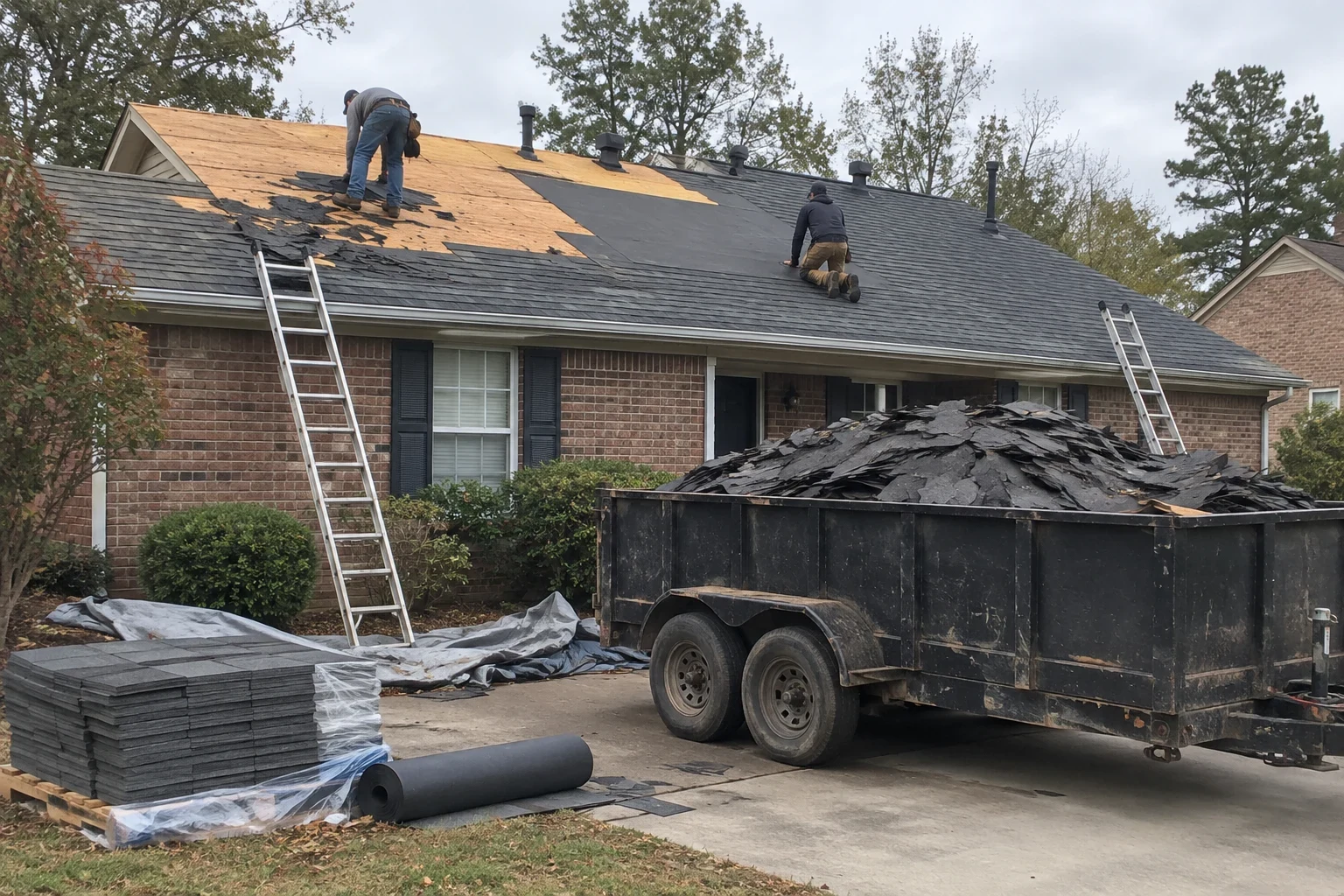
Replacement makes sense when the shingle field is worn out across the roof, not when a single spot drips. Over the years asphalt shingles shed the ceramic granules that shield them from sunlight, the asphalt below dries out and stiffens, and the adhesive strips lose their grip. Patch one area and the next tired section starts leaking a few feet away.
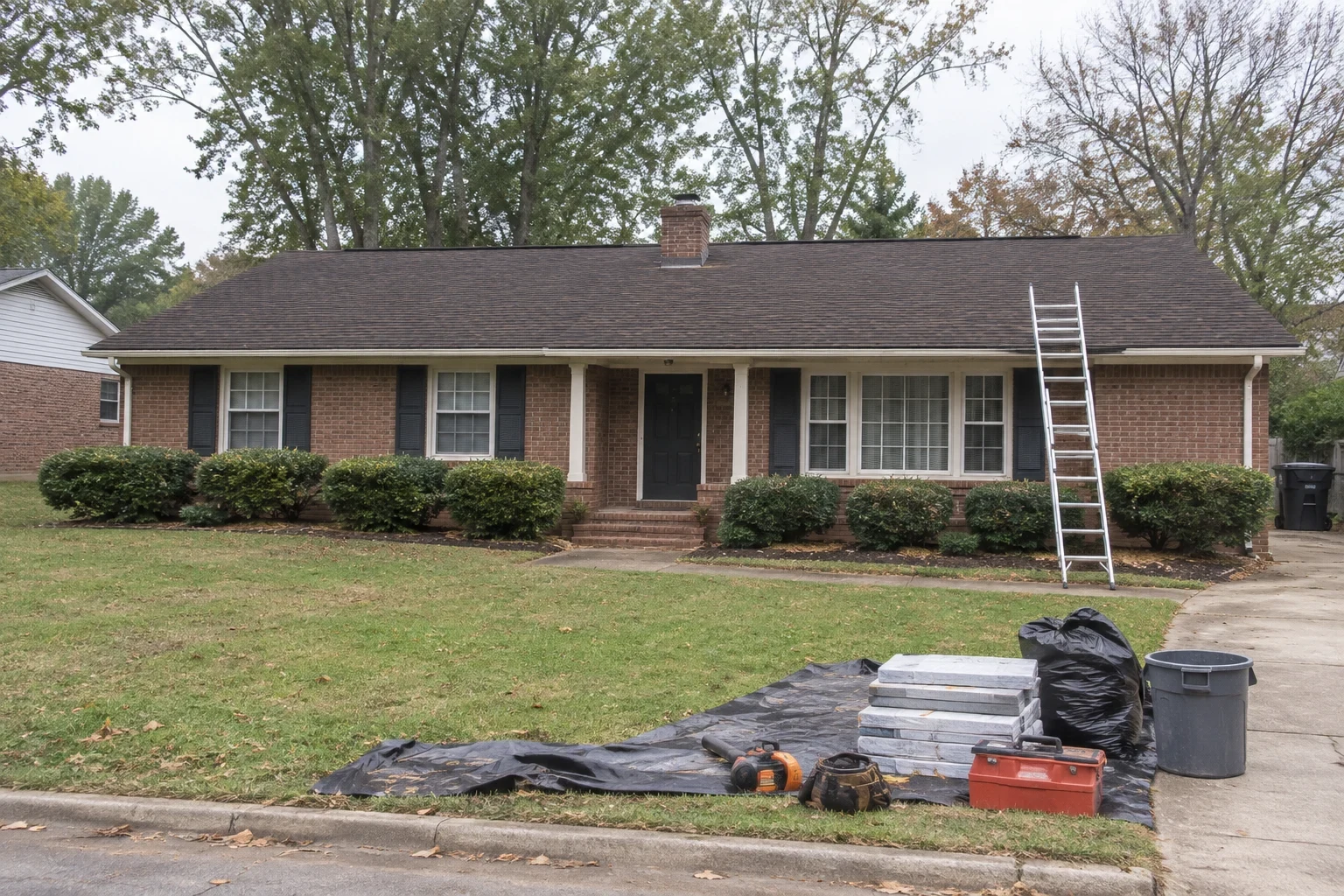
Every job begins with an inspection and photos. If a roof repair will give you several more good years, you hear that from us first. If the shingles are finished, we show you the granule loss, cracking or soft decking that tells us so. Our crews complete more than 1,000 roof inspections every year, so we know what each stage of wear looks like on a real roof.
What a Replacement Includes
Tear-off down to bare sheathing
Every old shingle layer and the old felt come off. We skip overlays because a second layer conceals soft decking and holds heat against the new shingles, which shortens their life.
Decking check and new sheets
Once the deck is exposed, we walk it and mark plywood or OSB that is rotted, delaminated or spongy underfoot. Those sheets are cut out and replaced before underlayment goes down, and you get photos of each one.
Synthetic underlayment and ice and water membrane
A synthetic underlayment covers the whole deck. Self-adhering ice and water membrane is added in valleys, at the eaves and around pipes and vents, where wind-driven rain gets pushed sideways under shingles.
New flashing, boots and drip edge
Worn step flashing, tired chimney flashing and split rubber pipe boots cause more leaks than shingles do. We install new metal and new boots instead of reusing old parts, plus drip edge so runoff drops clear of the fascia board.
Balanced attic ventilation
We compare soffit intake with ridge or box vent exhaust. A stuffy attic bakes shingles from underneath in July and collects condensation on the sheathing in January.
Protection and nail cleanup
Tarps cover shrubs, beds and siding while old material comes off. Before we leave, a rolling magnet goes over the lawn, driveway and planting beds to catch stray nails.
Signs Your Roof Is Due for Replacement
Grit collecting at downspouts
Sandy granules piling up in gutters or at downspout outlets mean the shingles are losing their sun protection. Exposed asphalt breaks down quickly under a hot Carolina summer.
Curled or cracked tabs
Shingle edges that cup upward or split have gone stiff. Lifted tabs catch gusts and can tear loose in the next thunderstorm.
Dips in the roofline
A sag between rafters usually points to decking that has stayed wet for a long time. It should be looked at before the damage spreads to the framing.
Stains in several rooms
A single leak often traces back to a flashing or pipe boot. Water marks in multiple rooms suggest the roof is wearing out everywhere at once.
Patching every year
Paying for a repair two or three years in a row says the roof itself is the problem. At some point those repair bills are better put toward a new roof.
How the Work Goes
- 1
Inspection with photos
We climb the roof and check the attic when there is safe access. You receive photos of the shingles, flashing, vents and decking, each with a short note on what it shows.
- 2
Line-item estimate in writing
It breaks out tear-off, materials, flashing and ventilation, and sets a per-sheet price for decking, so replaced wood is billed at a rate you approved before work began. Where the town requires a permit, we pull it.
- 3
Strip and seal the deck on day one
On most homes the old roof comes off, bad sheets are replaced and underlayment goes down in a single day. The deck is covered before the crew leaves, so an evening shower lands on underlayment instead of bare wood.
- 4
Shingles, ridge cap and walkthrough
Starter strip, shingles, vents and ridge cap go on next. Before the truck is loaded, we go over the roof and yard with you and show each change we made.
What Moves the Cost
We price a replacement from measurements and from what the inspection turns up, never from a glance at the street. The factors below push the total up or down. If spreading the cost out works better for you, financing is available through Acorn Finance.
- Square footage and pitch
- Material and labor scale with the number of squares on the roof. Steeper slopes need extra safety gear and slower, more careful work.
- Old shingle layers
- A roof carrying two shingle layers takes longer to strip and fills more dumpster space than one with a single layer.
- Hidden decking damage
- Rot in the sheathing only shows once the old roof is off. That is why the per-sheet decking price is set in the estimate before work starts.
- Valleys, dormers and penetrations
- Every valley, dormer, skylight, chimney and extra roof plane adds flashing work and cutting time.
- Shingle and vent choices
- Moving to an architectural shingle, a heavier underlayment or new ridge vent changes the material cost.
Roof Replacement Questions
Something not covered here? (919) 887-9827
Can new shingles go right over the old ones?
We don't install overlays. A second layer hides rotted decking, holds heat under the new shingles and adds weight to the framing. Tearing off lets us repair the deck and replace flashing correctly.
Will homeowners insurance cover a replacement?
That depends on what damaged the roof. Wind and hail are often covered, while ordinary wear usually is not. We photograph the damage, meet your adjuster on site and help you through the claim, but coverage is the adjuster's call.
How many days does the job take?
Most single-family roofs are finished in one to two working days. A large roof, extra decking repairs or bad weather can add time. We will not start a tear-off with rain in the forecast.
Should I be home while you work?
You don't need to be. Please move vehicles out of the driveway and take pictures and fragile items off interior walls, because the nailing vibrates through the framing. We review the day's findings with you before we leave.
What credentials does your company carry?
Roofing Wendell is a licensed general contractor in North Carolina. We are also insured for the work we do on your home, and we can go over that coverage with you on the call.
Find Out If You Really Need a New Roof
We will inspect the roof, take photos and tell you whether repair or replacement makes sense. We work in Wendell and nearby towns including Knightdale, Zebulon and Clayton.